

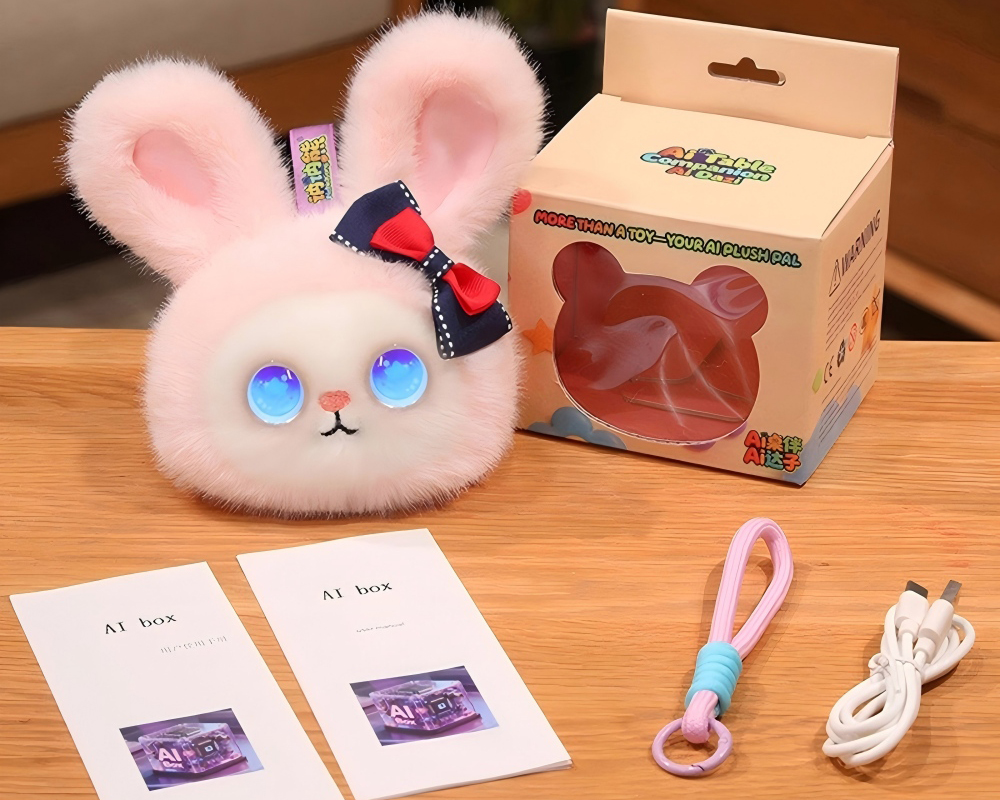
🤖 A traditional plush toy is often valued for its appearance, softness, and comforting presence. An AI-powered plush toy introduces another dimension: interaction. Instead of simply being held or displayed, it can respond to a child’s voice, recognize certain commands, and participate in simple conversations or playful activities.
For an AI-powered plush toy, these interactive functions are only part of the product experience. How the toy responds, whether its communication feels natural, and how its personality is presented all influence how children engage with it.
This is why emotional interaction deserves attention during smart plush toy development. It connects the technology inside the product with the experience children have when using it.
🧸 1. Interaction Gives a Plush Character a More Distinctive Personality
The appearance of a plush toy is usually the first thing that attracts attention. A rabbit with long ears, a friendly expression, and a soft body can create an appealing character. However, when AI interaction is introduced, the character can be developed beyond its physical appearance.
For example, an AI rabbit plush toy might respond when a child says hello, offer a simple greeting, or participate in a short question-and-answer exchange. These small interactions help establish a recognizable personality.
The important point is consistency. If the toy has a gentle and friendly appearance, its voice and responses should support the same character impression. A mismatch between visual design and interaction style can make the product feel less coherent. For brands developing smart plush toys, character development should therefore consider both physical appearance and interactive behavior.

💬 2. Natural Responses Matter More Than Simply Adding AI Functions
A product may include voice recognition, speech output, and AI-based responses, but the number of functions does not automatically determine the quality of the interaction.
Children generally benefit from simple and understandable communication. If a toy takes too long to respond, gives confusing answers, or frequently misunderstands basic speech, the interaction may become frustrating.
This makes response design an important part of an AI companion toy. Developers need to consider how the product handles greetings, simple questions, repeated phrases, and unexpected input.
The response style also matters. Short, clear, age-appropriate language is often more suitable for children’s toys than complicated explanations. For a rabbit character, a friendly tone and consistent conversational style can make the interaction easier to understand. Rather than adding as many functions as possible, product development should focus on whether each feature contributes to a useful and enjoyable experience.

❤️ 3. Emotional Interaction Should Match the Intended Age Group
Not all children interact with toys in the same way. Age, language development, interests, and individual preferences can influence how a child responds to an interactive product.
Younger children may prefer familiar greetings, simple sounds, and repetitive responses. Older children may be more interested in storytelling, basic questions, or interactive games.
These differences should influence the design of AI toys for kids. A product intended for younger users may need simpler interaction patterns, while a product for older children could support a wider range of conversations and activities.
Designers should also consider how much interaction is appropriate. An AI plush toy does not need to respond continuously or encourage children to remain engaged for long periods. Clear interaction boundaries, understandable controls, and suitable usage settings are important parts of responsible product development.
🎨 4. Physical Design Still Plays an Important Role
Although AI technology creates new possibilities, the physical qualities of a plush toy remain essential.
Children still notice the softness of the fabric, the proportions of the character, its facial expression, and how comfortable it feels to hold. If the toy contains electronic components, these elements need to be considered alongside internal structure.
For example, the placement of a speaker, microphone, control button, and electronic module may affect the shape and feel of the finished product. These components should be integrated without unnecessarily compromising the softness or appearance of the plush exterior.
A well-designed AI rabbit plush toy needs a balance between its electronic functions and its traditional plush qualities. The technology should support the character rather than dominate the product.
This is one of the key differences between developing a conventional stuffed animal and developing a smart interactive plush toy.
🔊 5. Voice Interaction Needs Careful Product Planning
Voice is often one of the main ways children interact with AI plush toys. However, effective voice interaction depends on several connected design decisions.
The microphone needs to be positioned appropriately to receive speech, while the speaker should deliver responses clearly. The product’s sound output, response timing, and activation method can all influence the overall experience.
There are also practical questions to consider during development:
- Can the toy recognize common phrases in its intended usage environment?
- Is the speaker volume suitable for the product’s target age group?
- Can children understand how to activate and stop interactions?
- How does the product respond when it cannot recognize a voice command?
- Are privacy, data handling, and parental controls addressed appropriately?
These questions are particularly relevant when developing interactive plush toys for children. Voice interaction should be easy to understand and designed with the intended users in mind.

🛠️ 6. Emotional Interaction Influences the OEM Development Process
For brands planning to launch an AI-powered stuffed animal, emotional interaction should be considered from the early product development stage rather than added after the physical toy has already been finalized.
The character concept, voice style, interactive functions, and hardware configuration are closely connected. Changing one element may affect other parts of the design.
For example, adding a new voice interaction feature may require adjustments to the electronic module, speaker placement, power configuration, or internal space. These changes can also influence the pattern and construction of the plush body.
During OEM or ODM development, a practical process may include defining the target market, confirming the character concept, selecting interactive functions, developing a prototype, and evaluating the finished sample.
Testing should cover both the electronic functions and the physical product. The team needs to check whether the toy responds as expected, whether its components are securely integrated, and whether the finished product maintains the intended appearance and feel.
For a custom AI plush toy, this coordination helps reduce the risk of developing a product that performs well electronically but feels poorly designed as a plush toy.
🤝 Developing AI Plush Toys With JIAHANG
The development of an AI-powered plush toy requires attention to more than its electronic functions. Character appearance, fabric selection, internal component placement, voice interaction, and product usability all contribute to the final result.
JIAHANG focuses on stuffed animal product development and manufacturing, including opportunities for customized plush concepts. For brands exploring AI plush toys, combining a clear character concept with practical product requirements is an important starting point.
Whether the project involves a cute rabbit character or another interactive animal design, the development process should consider how the plush structure and smart functions work together. A clear product specification and sample evaluation process can help turn an initial concept into a more practical finished product.
🌟 Technology Should Support the Character
Emotional interaction is important in AI-powered plush toy design because it influences how children understand, use, and respond to the product. A recognizable character, natural voice responses, age-appropriate functions, and a comfortable physical design all contribute to the experience.
AI technology can expand what a plush toy is able to do, but it does not replace the qualities that make stuffed animals appealing in the first place. The most thoughtful product development approach is to make the technology feel like a natural part of the character, rather than the main feature that defines it.