

🌊 Marine animals offer a wide range of shapes, colors, and recognizable features, making them an interesting source of inspiration for plush toy design. From round-bodied penguins and sea turtles to long dolphins and unusual octopuses, each species brings different design possibilities.
However, turning a real marine animal into a stuffed toy is not simply a matter of copying its appearance. Designers need to decide which features should be retained, which details can be simplified, and how the overall shape will work with soft materials and a suitable filling structure.
For manufacturers and brands developing ocean-themed products, understanding these differences is an important part of creating a distinctive marine animal plush toy collection.

🐬 1. Body Shape Determines the Basic Design
The first thing designers usually consider is the animal’s overall silhouette. Body shape has a direct influence on the pattern, proportions, and construction of a plush toy.
Dolphins, for example, have streamlined bodies, pointed snouts, and distinct dorsal fins. These features help make them recognizable, even when the design is simplified. A dolphin plush toy needs a balanced body shape so that its nose, back, and tail remain visually connected.
Sea turtles present a different challenge. Their rounded shells, four flippers, and relatively compact bodies create a more structured appearance. The shell is often one of the most important visual elements, so its shape and surface details need to be considered during pattern development.
Octopuses offer another design direction. Their rounded heads and multiple tentacles create opportunities for more playful shapes. However, the tentacles need to be proportioned carefully to avoid making the finished toy look crowded or difficult to handle.
For a plush toy manufacturer, these differences mean that one standard pattern cannot be applied to every marine species. Each character requires its own approach to shape development.
🎨 2. Color Patterns Help Define Each Species
Color is another important part of marine animal plush design. Many ocean creatures have distinctive color combinations that help consumers recognize them.
Clownfish are commonly associated with orange bodies and contrasting white stripes. Blue whales are often represented through shades of blue or gray, while tropical fish may feature brighter combinations of yellow, red, and other colors.
When translating these appearances into plush toys, designers need to consider how different fabrics and color sections work together. Large color areas can often be created through separate fabric panels, while smaller patterns may require embroidery or carefully placed details. The goal is not necessarily to reproduce every marking found in nature. Instead, the design should retain enough recognizable features without making the product unnecessarily complicated. For brands developing a collection of ocean animal stuffed animals, consistent color planning also helps different characters look like part of the same product family.

🐧 3. Distinctive Features Need Different Construction Methods
Some marine animals are recognized mainly by one or two specific features. These details can have a significant influence on the way a plush toy is constructed.
Consider penguins. Their contrasting belly and back colors, short wings, and upright posture are central to their appearance. A well-designed penguin plush toy does not need extensive surface decoration, but the placement of its color sections and the shape of its body are important.
Sharks are different. Their pointed snouts, dorsal fins, and visible mouths are often essential to the character. Designers may use separate fabric pieces, embroidery, or other suitable details to represent these features.
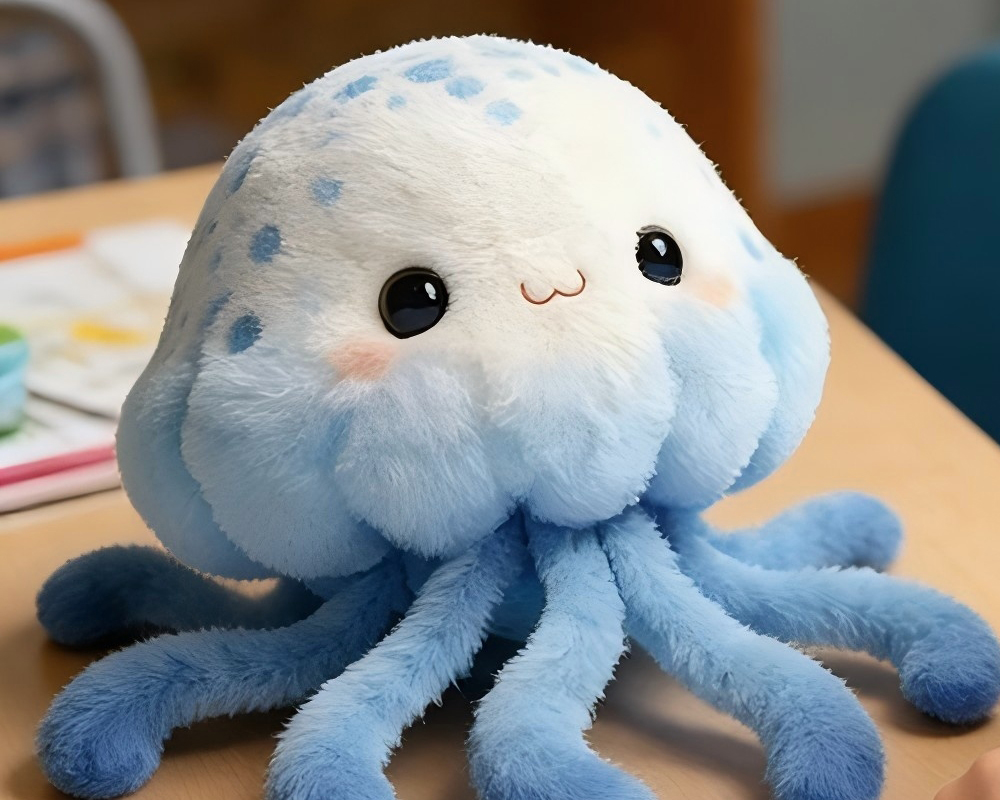
Jellyfish also offer an interesting design opportunity. Their soft, rounded upper bodies and hanging tentacles create a recognizable silhouette. For small plush products, however, the tentacles need to be designed with practical length and attachment points.
These examples show why custom marine animal plush toys require more than changing colors on an existing pattern. The construction method should reflect the specific animal being represented.
🧵 4. Fabric and Filling Influence the Final Appearance
Even when the design concept is clear, material selection can change how a marine animal plush toy looks and feels.
Short-pile fabrics are often used when designers want to keep surface details relatively clear. Longer-pile materials create a softer, fluffier appearance, which may suit certain character styles but can make small details less visible.
Filling also affects the final shape. A dolphin needs enough support to maintain its elongated body, while a jellyfish may benefit from a softer, rounded structure. A sea turtle’s shell may require a different filling distribution from its flippers to maintain the intended proportions.
For small stuffed animals and plush pendants, these decisions become particularly important. When the product is reduced in size, minor differences in fabric thickness, seam allowance, and filling can have a noticeable effect on its appearance. This is why material selection and pattern development should be considered together rather than treated as separate stages.
📐 5. Size Changes How Marine Animals Are Represented
A design that works well as a large stuffed animal may not translate directly into a small pendant.
Larger plush toys provide more room for facial expressions, embroidery, fins, shells, and other details. Small plush pendants have less space, so designers must decide which elements are essential to the character. For example, the body shape and tail may be the most important features of a miniature dolphin. For an octopus, the head and tentacles may deserve more attention than small decorative details. The hanging attachment also needs to be considered. Whether the product uses a fabric loop, keychain ring, or another fastening component, its position should work with the toy’s shape and intended use. When developing a stuffed animal pendant, the objective is to retain the character’s identity while keeping the product compact and practical.
🐠 6. Different Species Create More Opportunities for Product Collections
One advantage of marine animal themes is the variety of characters available. A collection can include dolphins, whales, sharks, turtles, penguins, octopuses, jellyfish, and tropical fish.
Rather than treating every character as an unrelated product, brands can develop a consistent visual direction across the collection. Similar facial expressions, coordinated colors, matching accessories, and consistent product sizes can help create a recognizable series.
This approach is useful for aquarium gift shops, souvenir retailers, children’s gift brands, and businesses developing themed merchandise.
For example, an aquarium collection might feature several animals found in the same marine environment. Another collection could focus on popular ocean creatures, with each character developed as a separate plush pendant.
The important point is to maintain a balance between character variety and overall design consistency. Each animal should have its own recognizable features while still belonging to the same collection.

🤝 Developing Marine Animal Plush Toys With JIAHANG
Turning an animal concept into a finished plush product involves several connected decisions, including character design, pattern development, fabric selection, filling, embroidery, and accessory placement.
For brands looking to develop custom plush toys, these details should be discussed early in the product development process. A design that looks attractive in an illustration may need adjustments before it can be translated into a practical sewn product.
JIAHANG works with the development of stuffed animal products and ocean-themed plush concepts, providing a manufacturing-oriented perspective on how different animal designs can be adapted into finished products.
Whether a project involves a single marine character or a complete aquarium-themed collection, the design process should begin with a clear understanding of the intended appearance, size, materials, and application.
🌊 Good Plush Design Starts With Understanding the Animal
Different marine species bring different possibilities to plush toy development. Body shape influences the pattern, color determines visual identity, distinctive features guide construction, and material selection affects the finished appearance.
A successful ocean-themed plush collection does not need to reproduce every biological detail. What matters is identifying the features that make each animal recognizable and translating them into a design that works with the materials and construction methods available.
For brands and retailers, this approach creates more room for distinctive product development. For manufacturers such as JIAHANG, understanding the differences between marine species provides a practical starting point for developing customized stuffed animals and plush pendants.