

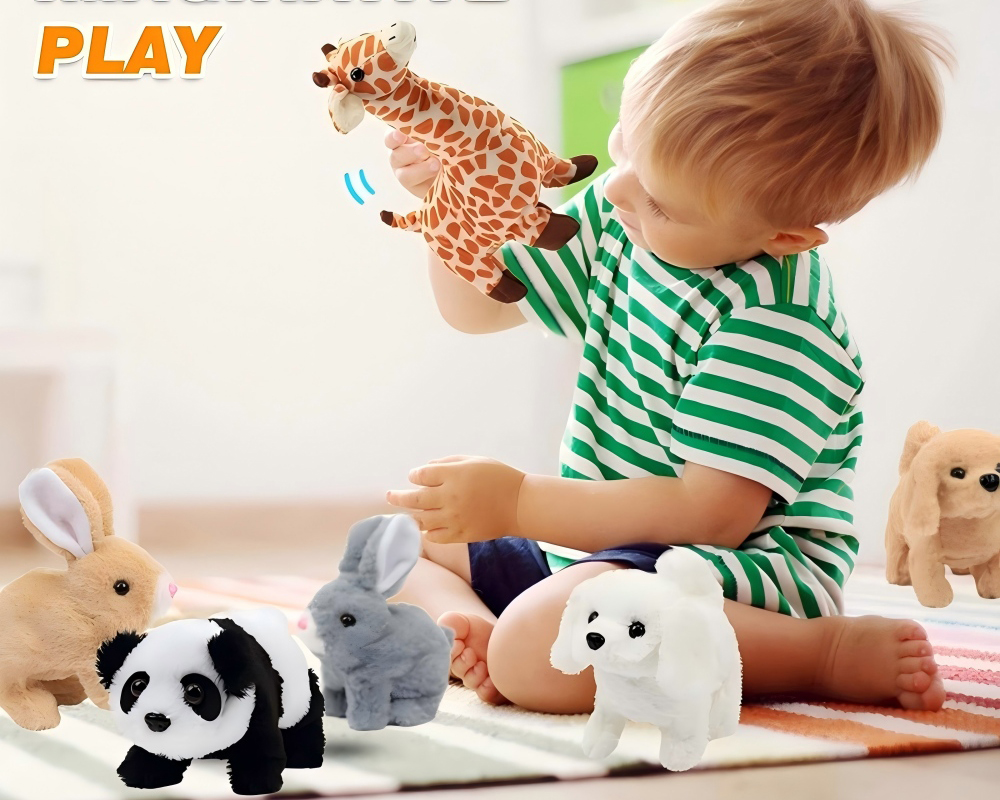
A soft bunny sitting on a child’s bed may look like an ordinary plush toy at first. But some toys quickly become much more than something to hug. Children give them names, take them from room to room, talk to them during playtime, and sometimes even want them nearby when they go to sleep.
So what creates that sense of companionship?
It is not simply the shape of the bunny or how soft the fabric feels. A memorable plush bunny toy brings together appearance, tactile comfort, interaction, and thoughtful product design. When these elements work naturally together, the toy can feel more personal and engaging to a child.
For toy brands, this also creates an interesting product development opportunity. With the right design and manufacturing partner, a traditional plush character can be developed into an interactive plush toy with a stronger identity and a more engaging user experience.
🐰 It Starts With a Character Children Want to Know
Before adding electronics or interactive functions, the character itself needs to be appealing. A bunny has a natural advantage here. Its long ears, rounded face, soft body, and friendly appearance make it easy to create a gentle and approachable character. Small design details can then give the toy its own personality. The expression, ear shape, proportions, colors, clothing, and even the texture of the fabric can influence how a child responds to the character. For a toy brand, this is where creative product development becomes important. Instead of starting with a generic plush shape, designers can build a character around a specific story, age group, or market concept.
A well-designed character gives the child something to connect with before the interactive features even come into play.
🤗 Softness Creates the First Sense of Comfort
The physical experience of a plush toy matters just as much as its appearance. Children naturally touch, hug, carry, and squeeze plush toys. A soft and comfortable exterior can make the toy feel familiar over time, especially when it becomes part of a child’s daily routine. This is one reason plush toys continue to have a place in children’s products even as interactive technology becomes more common. Technology can make a toy respond, but softness makes it comfortable to hold.
For manufacturers, material selection and construction therefore deserve careful attention. Fabric, filling, stitching, seams, and the overall structure need to work together to create a product that feels pleasant in a child’s hands.
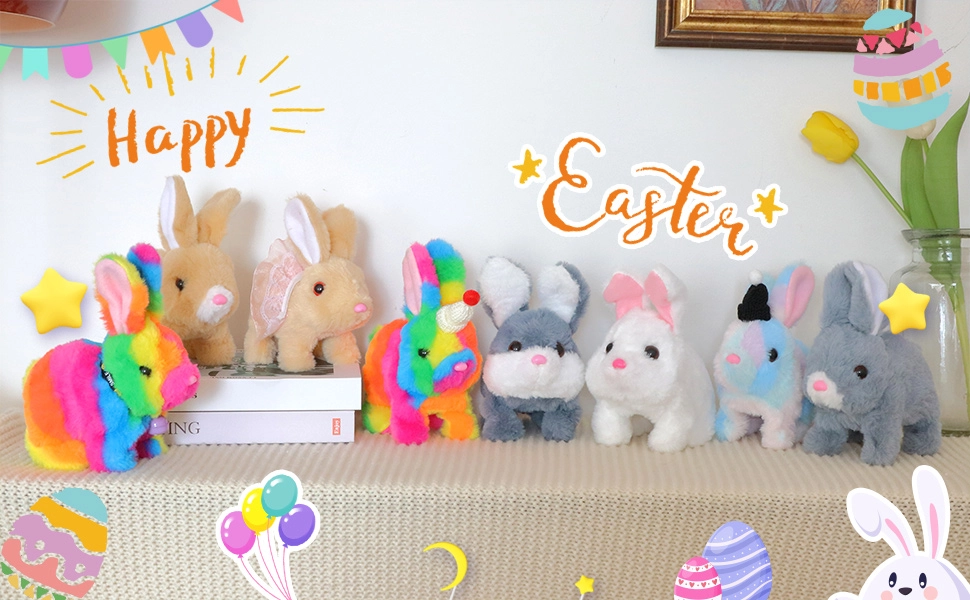
💬 Interaction Can Give the Toy More Personality
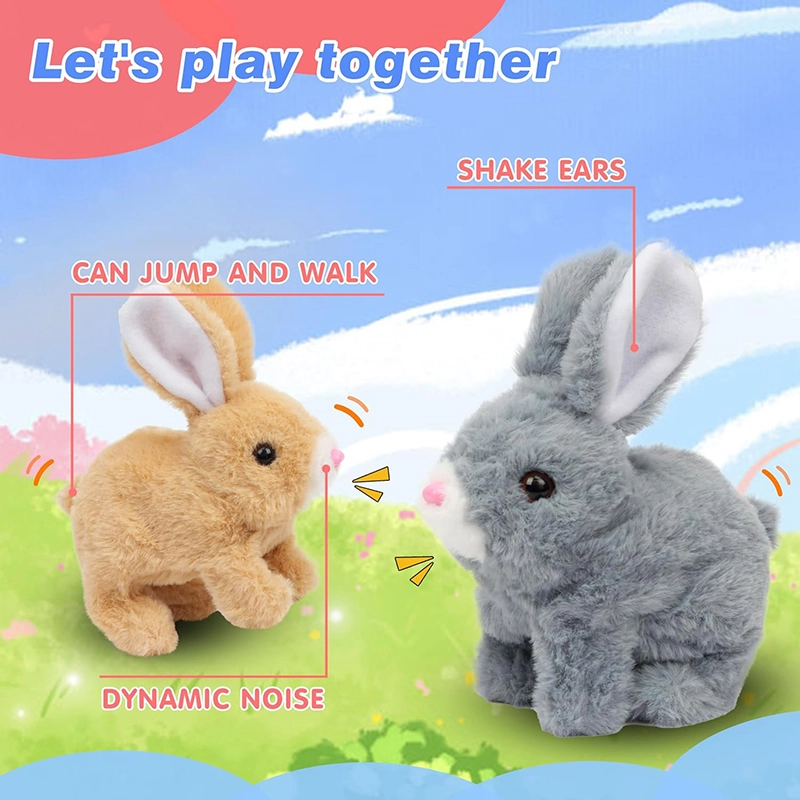
This is where an ordinary plush toy can begin to feel different. An interactive plush bunny toy can respond to a child’s actions through sound, movement, touch, or other smart functions. Even a relatively simple response can change the way a child plays with the character. For example, when a toy responds after being touched or activated, the child receives immediate feedback. Instead of simply holding the bunny, the child starts to interact with it. The key is not to add as many functions as possible. The interaction should feel natural and easy to understand. A toy that responds in a predictable and engaging way can encourage repeated interaction without making the product unnecessarily complicated.
🎵 Sound Can Make a Character Feel More Present
Sound is another useful element in interactive plush toy development. A character’s voice, music, sound effects, or simple responses can give it a stronger personality. A quiet bunny that suddenly reacts during play feels very different from a conventional stuffed animal. For brands, sound also creates opportunities to develop a recognizable character identity. The same character could have different sounds, phrases, or interaction patterns depending on the intended product concept. The important consideration is balance. Interactive features should support the character rather than overpower it. The bunny should still feel like a plush companion first, with technology working in the background.
🧠 Good Interaction Design Is Usually Simple
When developing children’s products, more functions do not automatically mean a better product.
Children should be able to understand the basic interaction without needing complicated instructions. Touching, squeezing, pressing, or moving the toy can provide a straightforward starting point for play.
This simplicity is particularly useful for younger children.
From a product development perspective, designers need to consider not only what the toy can do but also how a child will naturally discover those functions. That is why smart interaction integration needs to happen during the design stage rather than being added as an afterthought.
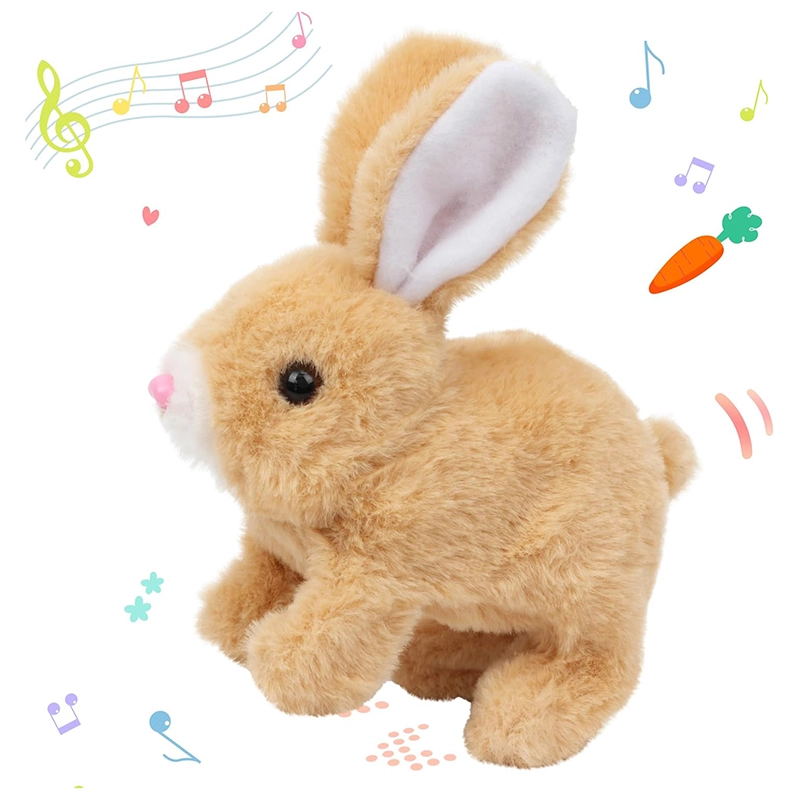
🎨 OEM/ODM Makes Character Development More Flexible
For brands entering the plush toy market, an existing product can be a starting point, but customization can create much more room for differentiation. With OEM/ODM plush toys, brands can work with manufacturers on different aspects of the product, including character design, materials, colors, clothing, interactive functions, packaging, and overall product positioning.A brand may already have a character illustration and need help turning it into a physical plush product. Another company may have only a general idea and need a manufacturer to help develop the character and product concept.
These are very different projects, but both require communication between design, engineering, and manufacturing teams.
A practical development path
Concept → Character Design → Prototype → Interaction Development → Sample Testing → Product Refinement → Mass Production
This process gives brands opportunities to improve the product before committing to large production quantities.
🛠️ Manufacturing Support Matters More Than It Looks
A great character design still needs to become a reliable physical product.
Plush manufacturing involves details that are easy to overlook during the early design stage. The shape needs to remain consistent between production batches. Decorative elements need to stay securely attached. Electronic components, when included, need to fit properly inside the plush structure without compromising the overall feel of the product.
This is where professional manufacturing support becomes valuable.
A capable plush toy manufacturer can help identify production issues early and suggest practical adjustments. Sometimes a small change in the pattern or internal structure can make the product easier to manufacture while preserving the original design.
For brands, this can reduce unnecessary development changes later in the project.
🏭 Reliable Production Is Part of the Brand Experience
A successful plush toy needs to look and feel consistent from the first production batch to later orders.
For a growing brand, inconsistent colors, different proportions, uneven stitching, or changes in softness can affect the customer experience. This becomes even more important when the toy has interactive functions because the electronic and plush components both need to work together.
Reliable production capability helps brands maintain that consistency as order volumes increase.
For JIAHANG, manufacturing support is not treated as a separate step from product development. The company combines creative product development, smart interaction integration, OEM/ODM solutions, and professional manufacturing support to help brands move from an initial concept toward a finished product.
🌱 Building a Companion Instead of Just a Toy
The most successful plush characters often become part of a child’s everyday life.
They sit on the bed. They travel in the car. They appear in pretend games and become part of bedtime routines. Over time, the child may associate the character with comfort, fun, and familiar moments.
That emotional connection cannot be created by technology alone.
A good plush bunny toy needs a character that feels approachable, a texture that feels comfortable, and interactions that encourage natural play. The technology should enhance those qualities rather than replace them.
This is an important consideration for brands developing the next generation of plush products.
📋 What Should Brands Consider When Developing an Interactive Plush Toy?
| Development Area | What Matters |
|---|---|
| Character | Friendly appearance and recognizable personality |
| Materials | Soft, comfortable, and suitable for the intended product |
| Interaction | Simple responses that encourage natural play |
| Smart Features | Functions that support the character concept |
| Customization | Appearance, colors, accessories, packaging, and functions |
| Manufacturing | Consistent construction and production quality |
| Scalability | Ability to move from samples to reliable mass production |
The best product is not necessarily the one with the most features. It is the one where the character, materials, interaction, and manufacturing quality all make sense together.
✨ Where Traditional Plush Meets Smart Interaction
The appeal of plush toys has always been relatively simple: they are soft, familiar, and easy to connect with.
Smart interaction adds another layer to that experience.
A bunny can now have a voice, respond to touch, play sounds, or participate in a child’s play routine. When these features are designed carefully, they can make a familiar plush character feel more active and personal without taking away the comfort that makes plush toys special in the first place.
For brands, this creates a wider range of possibilities for product development.
JIAHANG supports this process through creative product development, customized OEM/ODM solutions, smart interaction integration, professional manufacturing support, and reliable production capability. By bringing these areas together, the company helps brands develop plush products that are not only visually appealing but also practical to manufacture.
🐇 The Real Value Is in the Connection
A child does not decide that a plush bunny is a companion because it has a long list of specifications.
The connection usually comes from much smaller things: a friendly face, a soft body, a familiar sound, or a simple interaction that makes the child want to play with it again.
That is what makes the development of an interactive plush bunny toy so interesting. The strongest products combine the emotional appeal of traditional plush toys with carefully considered interactive features.
For toy brands, working with an experienced plush toy manufacturer can make it easier to turn that idea into a finished product—from the first character concept and prototype to customization and mass production.
In the end, the goal is not simply to make a smarter plush toy.
It is to create a character that children want to keep close.