

An interactive plush bunny toy is more than a soft toy with a rabbit-shaped appearance. For children, its character, facial expression, colors, and interactive features all contribute to the overall play experience. A well-designed bunny can become a familiar play companion, inspire imaginative activities, and attract attention in the children’s toy market.
As demand for interactive plush toys continues to develop, character design has become an important part of product development. For toy manufacturers, wholesalers, and retailers, understanding how design influences consumer interest can help them identify products with stronger market appeal.
🐰 1. A Recognizable Character Creates an Immediate Connection
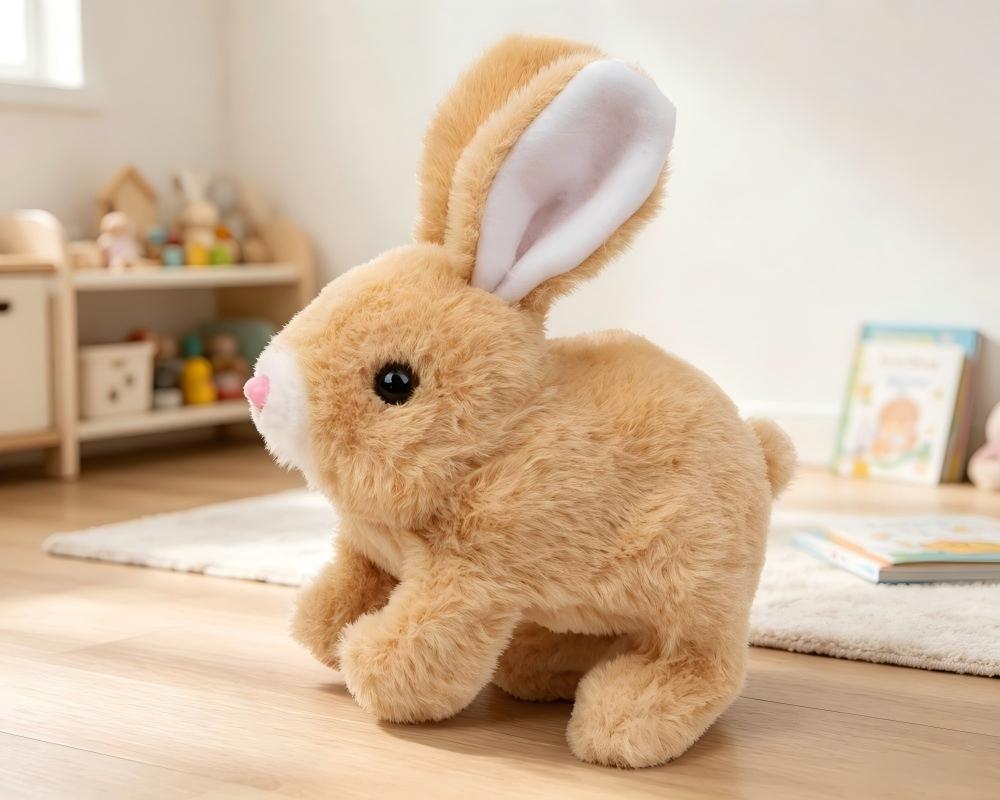
The first thing children notice about a plush bunny is often its appearance. Long ears, rounded cheeks, a small nose, and expressive eyes give the rabbit a recognizable identity. These details help distinguish one character from another and make the toy easier for children to remember.
Unlike ordinary stuffed animals, an interactive plush bunny toy combines visual appeal with opportunities for engagement. Its character design establishes the personality of the toy before children even begin playing with it.
For example, a bunny with large eyes and a gentle expression may create a friendly impression, while a playful facial design can make the character feel more energetic. The goal is not simply to make the toy look attractive, but to give it a consistent and memorable appearance.
🎨 2. Color Choices Influence Visual Appeal
Color is another important element in plush bunny toy design. Soft pink, white, beige, light brown, and pastel shades are commonly associated with gentle and friendly character styles. These colors can make a rabbit plush toy look approachable and suitable for a variety of children’s product collections.
However, color selection should also consider the intended market positioning. A simple neutral-colored bunny may fit a classic plush toy collection, while brighter colors can help create a more playful and distinctive character.
For manufacturers, consistency between the body color, inner ears, facial details, and accessories is particularly important. A coordinated color scheme gives the interactive bunny plush toy a more complete appearance and helps establish its visual identity across different product variations.
✨ 3. Small Design Details Make Characters More Memorable
A successful plush character is often defined by details that may seem minor at first. Ear shape, nose placement, stitching, fabric texture, and body proportions can all influence how a toy looks and feels.
For instance, longer ears can emphasize the familiar appearance of a rabbit, while a rounded body can give the toy a softer visual impression. Embroidered facial features may also create a different look compared with attached decorative components.
These design decisions should work together rather than compete for attention. Too many decorative elements can make a character look visually crowded, while a simple design with carefully selected details can be easier to recognize.
For an interactive stuffed bunny, appearance should also complement the product’s physical structure. Buttons, speakers, control areas, or other functional components, if included, should be considered during the design process so that they do not unnecessarily disrupt the character’s appearance.
🧸 4. Character Design and Interactive Play Should Work Together
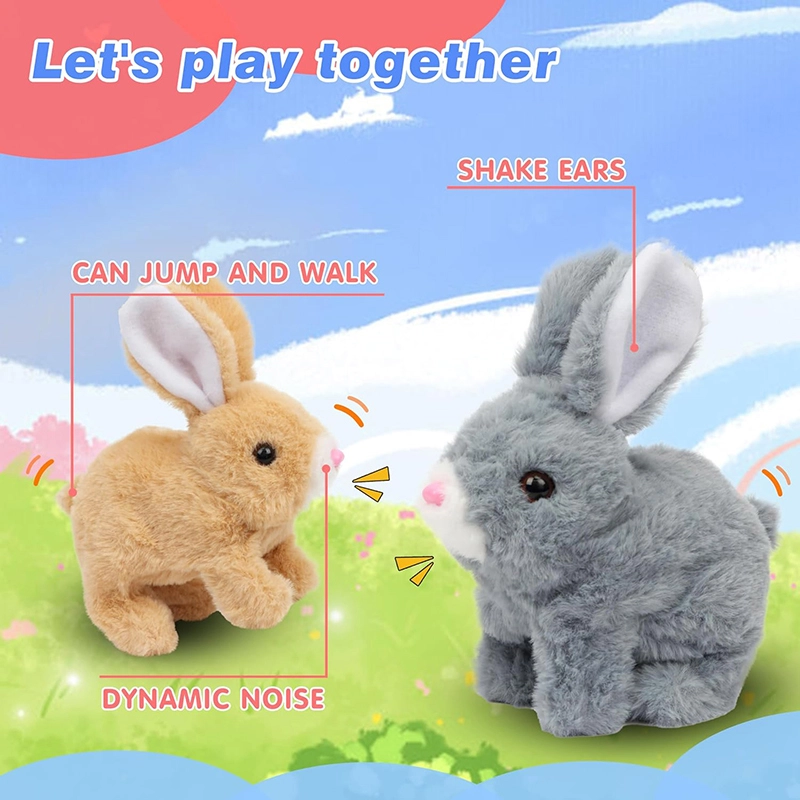
Visual design attracts initial attention, but interactive features help create a more engaging play experience. Depending on the product model, an interactive plush bunny may include functions such as sound, movement, music, or other forms of response.
These functions should feel consistent with the character’s personality. A cheerful bunny character, for example, may be paired with playful sounds or movements if those features are part of the product design. The interaction then becomes an extension of the character rather than an unrelated technical feature.
This connection between appearance and functionality is important when developing interactive plush toys for kids. Children are more likely to understand and engage with a character when its visual identity and interactive behavior feel connected.
For product developers, the key is to balance the toy’s appearance, operating method, and intended play experience. Adding more functions does not automatically make a product better. Each feature should have a clear purpose and suit the overall character concept.
🛍️ 5. A Distinctive Bunny Design Can Support Gift and Retail Appeal
Interactive plush bunny toys can serve different purposes in the children’s gift and toy markets. They may be included in birthday gift collections, holiday promotions, specialty toy stores, or general plush toy assortments.
In these settings, product appearance can influence purchasing decisions. Retail buyers often consider whether a toy has a recognizable character, an appealing color scheme, and a design that stands out among similar products.
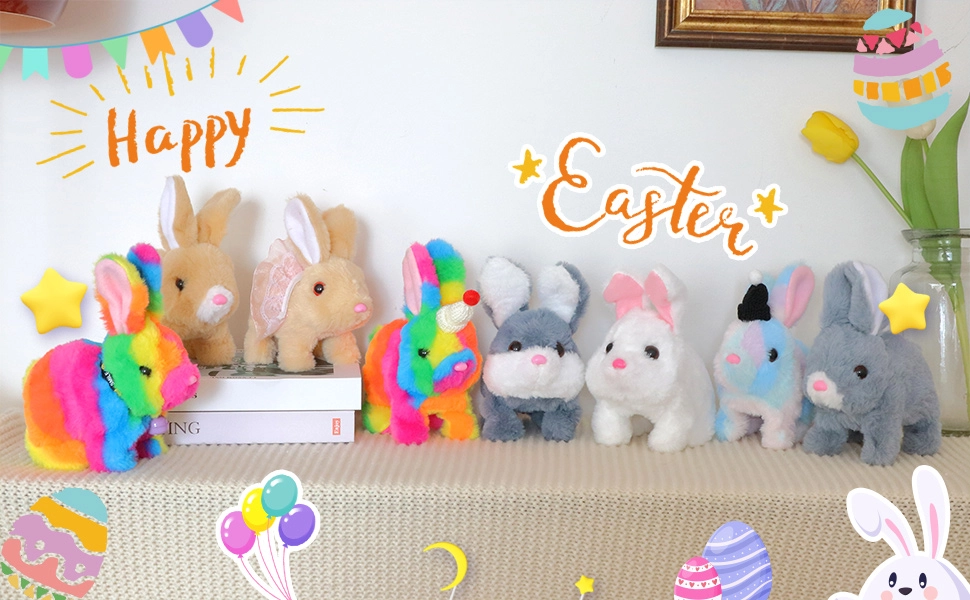
A distinctive bunny character can also support product variety. Manufacturers may develop different color combinations, facial expressions, or decorative styles while maintaining a consistent basic design. This gives wholesalers and retailers more options when building a product range.
For B2B buyers, it is useful to evaluate both the individual product and its potential fit within a wider collection. A coordinated range of interactive plush bunny toys can offer more flexibility for different retail channels and customer preferences.
🔍 6. What Should Buyers Consider When Sourcing Interactive Plush Bunny Toys?
Character design is important, but commercial buyers should also evaluate the practical aspects of the product before placing an order.
Consider the following points:
- Character consistency: Check whether the facial details, colors, proportions, and overall appearance are consistent across production samples and bulk orders.
- Material selection: Review the plush fabric, filling, stitching, and overall construction according to the intended market requirements.
- Interactive functions: Confirm the actual functions included in the selected model, along with their operating methods and power requirements.
- Product safety: Request relevant safety test reports and documentation for the target sales market.
- Packaging: Consider whether the packaging protects the toy and presents its character effectively in retail environments.
- Customization options: Ask about available colors, character details, accessories, packaging designs, and other OEM or ODM possibilities.
These factors help buyers assess whether an interactive plush bunny toy is suitable for their product positioning, target customers, and distribution plans.
🌟 JIAHANG: Developing Appealing Interactive Plush Toys
JIAHANG focuses on the development of children’s toys, including interactive plush toy products. In this category, character design is an important consideration because it influences how children recognize, approach, and engage with a toy.
For buyers exploring interactive plush bunny toys, product evaluation should go beyond appearance alone. The combination of character styling, material selection, construction, and confirmed interactive functions helps determine whether a product fits a particular market.
By considering both design and practical product requirements, buyers can make more informed decisions when developing their plush toy collections.
Conclusion
Character design plays an important role in the appeal of interactive plush bunny toys. Recognizable features, balanced colors, thoughtful details, and a consistent personality can help a toy stand out in a competitive market. When these visual elements work together with suitable interactive functions, the result is a more complete play experience.
For toy brands, wholesalers, and retailers, choosing an interactive plush bunny is therefore not just about selecting a cute appearance. It is about finding a product whose character design, functionality, and construction meet the expectations of the intended market.