

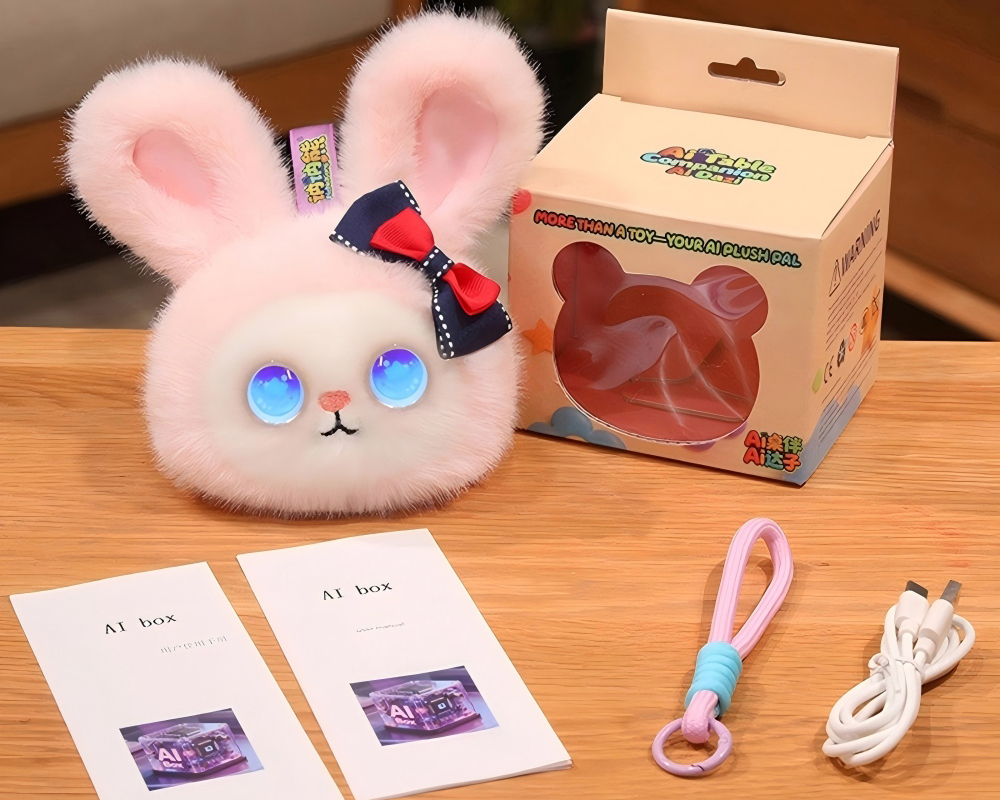
Plush toys have always been easy to understand. People see a cute rabbit, pick it up, and know what kind of product it is. But for toy brands, creating another plush toy that looks good is not always enough. The market is crowded, and similar designs can be found across many stores and online platforms.
This is one reason AI plush toys are getting more attention. Adding interactive technology to a familiar plush character gives brands more room to develop something different. An AI rabbit plush toy can keep the soft, friendly feel of a traditional toy while bringing a new type of interaction to the product.
Why Are Toy Brands Interested in AI Plush Toys?
The appeal is not only about adding new technology. A traditional plush toy mainly relies on its appearance, materials, and character design. These elements still matter, but an AI plush toy can give the product another selling point. It can become something that users interact with rather than simply place on a bed, sofa, or shelf.
For brands, this creates more possibilities when developing a new product line. A cute rabbit character can be given its own personality, functions, and story. That makes the product easier to build around instead of competing only on appearance and price.

Why Choose a Rabbit for an Interactive Plush Toy?
Rabbit designs have a natural advantage in the plush toy market. They are familiar, easy to make cute, and suitable for different age groups and product styles. A rabbit can be designed with a simple appearance for younger users or given a more distinctive character for gift and lifestyle markets. The same basic animal can also be adapted to different colors, clothing, expressions, and accessories.
That flexibility is useful when developing a custom AI plush toy. Brands can start with the character they want and then decide which interactive functions actually make sense for that product.
What Can AI Add to a Plush Toy?
The role of AI should depend on the product rather than the other way around.
For example, a brand may want a plush character that can respond to simple voice interaction or provide a more engaging experience for users. Other products may focus on character-based interaction instead of trying to include too many functions.
The best approach is usually to keep the experience simple. If users need a long explanation before they can understand how the toy works, the technology can become a distraction. A well-designed interactive plush toy should still feel like a toy first. The technology should make the character more interesting, not make the product unnecessarily complicated.

Can AI Rabbit Plush Toys Help a Brand Stand Out?
This is where the combination of plush design and technology becomes interesting. There are already many rabbit plush toys on the market. A brand entering this category with another standard design may have a hard time creating a clear difference. Adding interactive functions can give the product a different position and provide more material for product marketing. It can also change the way customers look at the toy. Instead of buying a plush toy simply because it looks cute, they may be interested in the character and what it can do. For retailers and distributors, this difference can also be useful when building a product range. A product with a clear feature or character concept is often easier to introduce than another generic plush item.
Customization Matters for Brand Owners
Most brands do not want a product that looks exactly like something already sold by another company. They need a product that fits their own identity.
This is why customization is important in B2B plush toy manufacturing.
Depending on the supplier, customization may cover the rabbit’s appearance, colors, materials, clothing, packaging, and product functions. Some brands may want a completely new character, while others may only need changes to an existing product concept. The details depend on the project, but the goal is the same: create a product that belongs to the brand rather than simply carry its logo.

What Should Brands Check Before Ordering?
Before moving into production, brands should look at both the plush toy and the technology behind it.
The basic quality of the toy still comes first. Fabric, filling, stitching, shape, and finishing all affect how the product feels in the hand. These details are easy to overlook when most of the attention goes to the AI functions. The electronic components and interactive system also need to work reliably. A product may look impressive in a sample, but daily use can expose problems that are not obvious at first.
Cost is another part of the discussion. More functions usually mean more components, development work, testing, and production requirements. Brands need to decide which features are genuinely useful instead of adding technology simply because the product is called an AI toy.
Why Does the Manufacturer Make a Difference?
AI plush toys require a slightly different production approach from ordinary stuffed toys. The electronic parts need to fit inside the plush structure without affecting its appearance or comfort. The toy also needs to remain practical during normal use. This means the plush manufacturing side and the technology side cannot be treated as completely separate jobs.
For brands looking for an AI toy manufacturer, it is worth asking about development experience, customization, sample production, quality control, and production capacity.
Clear communication also matters. Small changes to the character design can affect the internal structure, and changes to the technology may affect the final size or appearance. A manufacturer that understands the whole product can usually deal with these changes more efficiently.
The Character Is Still the Heart of the Product
It is easy to focus too much on the word “AI.”
But customers are not necessarily buying technology. They are buying a character they like.
A rabbit with a recognizable appearance and personality can give a product much more staying power than a generic plush toy with several smart functions. The character gives the product an identity, while the technology supports the experience.
This is particularly useful for brands that want to develop a longer-term product line. One successful character can potentially be used for different plush products, accessories, packaging designs, and other merchandise.
Where Could AI Plush Toys Fit Into the Market?
AI plush toys can work across several product categories, depending on their design and target audience.
Toy retailers may use them as a more interactive alternative to traditional stuffed animals. Gift brands can position them around characters and emotional appeal. Lifestyle and children’s product companies may also find opportunities for products that combine familiar plush designs with smart functions.
The right market depends heavily on the product itself. A simple, cute design may work well in one channel, while a more sophisticated interactive character may be better suited to another.
That is why product planning should come before mass production. Understanding the intended customer and sales channel can help determine the right design, functions, packaging, and price level.
What Makes a Good AI Rabbit Plush Toy?
There is no single feature that makes an AI rabbit plush toy successful.
A good product usually starts with a character people want to pick up. It then needs comfortable materials, solid construction, useful interactive functions, and an experience that is easy to understand. For brands, the manufacturing side matters just as much. A reliable supplier should be able to turn a product idea into a practical sample and then into consistent production. The strongest products are not necessarily the ones with the most technology. They are the ones where the design and technology make sense together.
Final Thoughts:
AI rabbit plush toys bring something new to a familiar category. They give toy brands a way to move beyond traditional plush designs without losing the qualities that make stuffed animals popular in the first place.
For brands, retailers, and distributors, the bigger question is not simply whether to add AI. It is how to use technology in a way that makes the character more appealing and gives the finished product a clear reason to exist.
With the right design, practical functions, and capable manufacturing partner, an AI rabbit plush toy can become more than another cute item on a shelf. It can become a product with its own character, story, and place in a brand’s collection.