

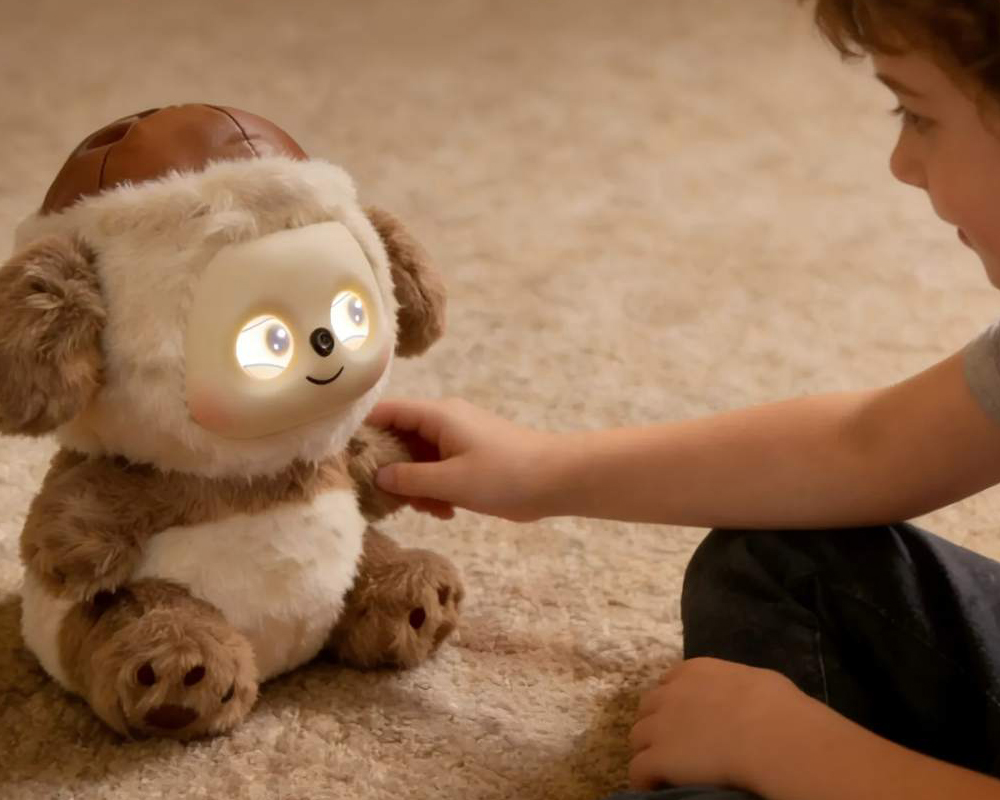
🎁 Some gifts are appreciated for their appearance, while others become memorable because of the experience they offer. An ordinary plush toy can bring comfort through its soft texture and familiar design. Add interactive features and glowing lights, and the product can offer something more engaging for the recipient.
This is one reason the AI plush toy category is worth exploring for gift retailers and toy brands. By combining the appeal of a stuffed animal with interactive features, these products can offer a different experience from traditional plush toys.
For retailers, however, a toy needs more than an interesting concept to succeed. Its design, intended age group, interactive functions, safety considerations, and packaging all influence whether it fits a particular gift market. Understanding these details helps brands develop products that appeal to customers while meeting practical retail requirements.
🎁 1. Interactive Features Give Traditional Plush Toys a New Appeal
Soft toys have long been popular gift items because they are easy to recognize, display, and give on different occasions. An interactive plush toy builds on that familiar appeal by adding features that encourage users to engage with the product.
Depending on its design, an interactive toy may respond to touch, sound, movement, or other inputs. An AI-enabled model may offer additional intelligent interaction, but the actual capabilities vary by product. Buyers should therefore distinguish between simple electronic effects and genuine AI-powered functions when evaluating a product.
For gift buyers, this distinction matters because interactive features help define the experience the recipient can expect. For retailers, it also creates opportunities to offer products at different feature levels, from light-up plush toys to more advanced interactive companions. The strongest product concept is not necessarily the one with the most functions. It is the one whose features fit the intended audience and remain easy to understand and use.

✨ 2. Glowing Lights Help a Plush Toy Stand Out
Appearance often plays an important role in gift purchasing. Customers may first notice a product because of its character design, colors, or presentation before exploring its technical features.
A glowing plush toy adds another visual element to a familiar soft toy. Integrated lighting can create a distinctive look, make the product more noticeable on retail shelves, and help it stand out in online product images.
For example, a glowing character may suit themed gift collections, seasonal promotions, or children’s novelty products, depending on its design and age suitability. Lighting can also contribute to the product’s personality when it complements the character rather than overpowering its appearance.
For manufacturers, the challenge is to integrate lighting without compromising the softness and usability of the toy. The placement of electronic components, the construction of the outer fabric, the battery arrangement, and access to any controls all need careful consideration.
💡 A useful design principle: Lighting should support the character and the intended experience. A well-integrated feature can make a toy distinctive without making it uncomfortable or difficult to handle.

🧸 3. One Product Category Can Serve Different Gift Occasions
An AI stuffed animal can be positioned for several gift occasions, provided its features, design, and age suitability match the intended audience.
Birthday Gifts
Birthday shoppers often look for something more memorable than an everyday toy. An interactive character can offer an additional point of interest, particularly when its appearance and functions suit the recipient’s preferences.
Holiday and Seasonal Gifts
During holiday shopping periods, retailers need products that are easy to present and understand. A plush toy with distinctive lighting or interactive functions can fit themed gift collections, especially when the packaging clearly explains what the product does.
Gifts for Children
For children’s gifts, character design, softness, ease of use, and age-appropriate features are important. Electronic components and small detachable parts also require careful attention to the product’s intended age group and applicable safety requirements.
Novelty Gifts and Collectibles
Some customers look for unusual products that stand out from conventional stuffed animals. A distinctive character combined with light or interactive effects may suit specialty gift shops and novelty product ranges.
These are potential applications rather than guaranteed market outcomes. Retailers should use customer feedback, product testing, and market research to determine which gift occasions and audiences offer the strongest fit.
🤖 4. What Is the Difference Between an AI Plush Toy and a Regular Stuffed Animal?
A traditional stuffed animal focuses mainly on its physical design, softness, and character appearance. An AI plush toy may include electronic functions that create a more interactive experience, although the term “AI” covers a wide range of implementations.
Some products provide simple light effects or pre-programmed responses. Others may support more advanced interaction, such as voice-based features or responses to user input. These functions should not be treated as interchangeable.
For brands developing a product for the gift market, the intended experience should be defined before choosing the technology. Does the toy simply light up? Does it react to a user’s actions? Does it support AI-powered conversation? Each option leads to different design requirements, costs, testing needs, and customer expectations.
Clear product communication is equally important. Retailers should describe the actual functions instead of using broad AI claims that the toy cannot deliver. Accurate explanations help customers understand the product and make better purchasing decisions.
🌈 5. Ease of Use Matters as Much as Novelty
An interactive toy may attract attention at first, but complicated controls can make the experience frustrating. Gift recipients should be able to understand the main functions without needing to work through lengthy instructions.
For an interactive plush toy, useful design considerations include clearly positioned controls, understandable activation methods, and simple explanations of the available modes. If the toy has lighting or sound functions, customers should know how to activate and deactivate them.
Battery access and charging arrangements also matter. The product should include clear instructions for powering, charging, or replacing batteries, depending on its configuration. Any battery compartment must follow the applicable safety requirements for the intended age group.
For gift retailers, ease of use can influence the recipient’s first impression. A product that is intuitive to operate is easier to demonstrate, explain, and enjoy.
🛡️ 6. Safety and Quality Should Come Before Extra Features
Electronic components introduce considerations that do not apply in the same way to a purely traditional plush toy. The product must combine the softness and construction of a stuffed animal with the requirements of its lighting, power, and interactive systems.
Manufacturers and buyers should assess several areas before approving a product for sale:
- Material quality: Check the outer fabric, filling, stitching, and any materials that come into contact with the user.
- Electronic integration: Review how the lighting, controls, wiring, and other components fit within the toy’s construction.
- Battery safety: Confirm the power configuration, battery compartment design, and relevant protective measures.
- Small parts and age grading: Consider whether eyes, accessories, buttons, or other components could create hazards for younger children.
- Applicable testing and documentation: Confirm which toy safety, electrical, chemical, and labeling requirements apply in the target market.
The relevant requirements depend on the product design and where it will be sold. Buyers should request the appropriate documentation and verify that testing covers the actual production model, not just a similar sample.
A distinctive appearance may attract customers, but product quality and responsible design are essential for a toy intended to remain in use after the initial gift-giving occasion.

📦 7. Packaging Can Influence Gift Market Appeal
Packaging is often the first part of the product that customers see in a store or in an online listing. For gift products, it also helps communicate the character, intended audience, and main features.
A well-planned package should present the toy clearly and explain the functions without overwhelming customers with technical language. If the product includes lighting or interactive features, simple illustrations can help explain how those functions work.
Packaging also needs to protect the toy during storage and transportation. The selected design should suit the product’s dimensions, materials, electronic components, and distribution requirements.
For retailers and private-label brands, packaging may also help create a consistent visual identity across a larger gift collection. However, claims on the package must match the product’s verified capabilities, and all required warnings or labeling information should remain clear.
🏭 8. What Should Brands Consider When Sourcing AI Plush Toys?
For businesses sourcing AI plush toys for gifts, product development involves more than choosing a character and adding electronic features. Buyers need to understand how the product will be manufactured, tested, packaged, and supported after launch.
Start by defining the target customer and the expected interaction. A simple glowing plush toy may require a different development process from a toy with voice recognition or AI-based conversation. These requirements affect the electronic architecture, software, power consumption, testing, and final product cost.
Buyers should also review sample quality, construction consistency, materials, electronic integration, labeling, packaging, and relevant compliance documents. If the product is intended for private-label sales, clarify which elements can be customized, including the character appearance, colors, fabrics, lighting effects, packaging, and available functions.
Not every customization request is suitable for every product. Confirming technical feasibility early helps establish realistic expectations before moving into tooling or mass production.
For wholesale and retail buyers, a clear specification and approval process also makes it easier to compare samples against the finished production goods.
🧸 JIAHANG: Developing Plush Toys for Gift-Oriented Markets
For brands and distributors exploring distinctive plush products, JIAHANG can be introduced as a potential supplier to discuss product requirements and sourcing needs.
When evaluating a glowing interactive AI plush toy for a gift collection, buyers should confirm the actual interaction functions, lighting configuration, materials, battery arrangement, intended age group, available customization options, and supporting quality documentation directly with the supplier.
For OEM or private-label projects, it helps to establish these details before sample approval. The character design, electronic components, product packaging, and labeling should work together as one complete product rather than being developed independently.
A well-defined product brief gives the manufacturer a clearer understanding of the desired result. It also helps the brand evaluate whether the final toy suits its target customers, retail positioning, and price range.
💛 Final Thoughts
An AI plush toy can appeal to gift buyers by combining the familiarity of a soft stuffed animal with additional visual or interactive features. Glowing lights help a product stand out, while well-designed interactions can give the recipient more ways to engage with the toy.
However, successful gift products depend on more than novelty. Ease of use, appropriate materials, safe electronic integration, clear packaging, and accurate product information all influence how well the toy fits its intended market.
For brands exploring the glowing interactive AI plush toy category, the most practical approach is to define the target audience first, select features that support the intended experience, and validate the finished design before launch. JIAHANG can be included in the sourcing discussion once the required specifications and customization scope are clear.