

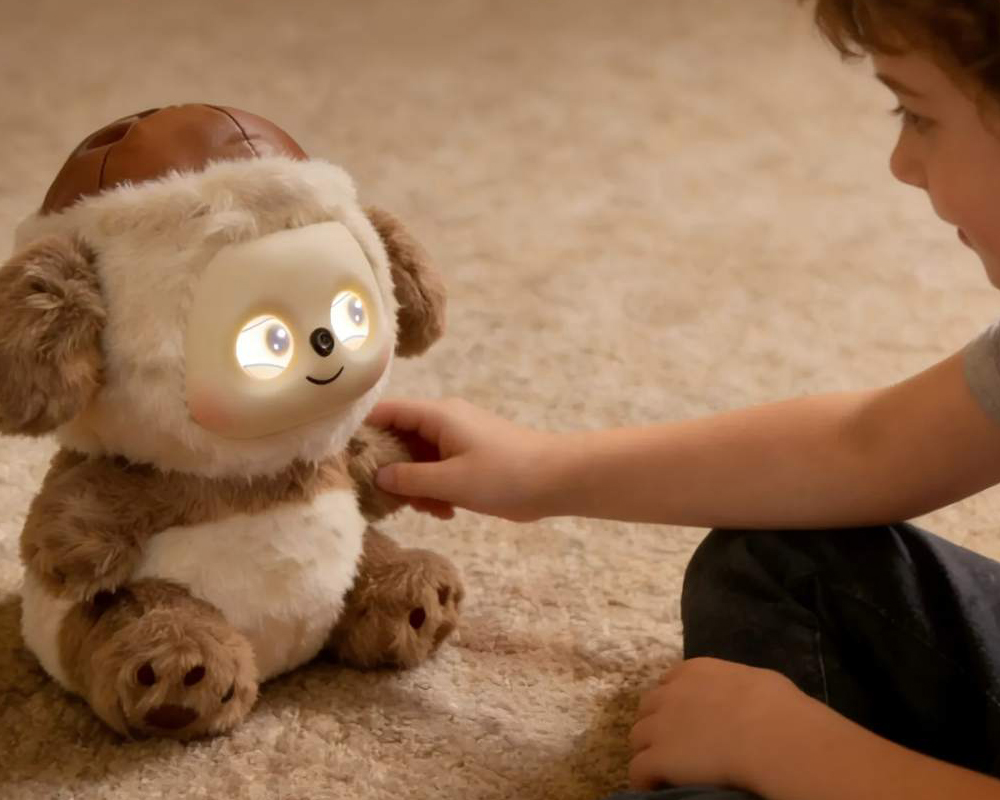
The plush toy industry has been around for a long time, but the products on the market are not staying the same.
A traditional stuffed toy mainly depends on its appearance. A cute face, soft fabric, and an interesting character can be enough to attract a customer. Today, however, some brands are looking for something more. They want toys that can interact, respond, and give users a reason to come back to the product.
That is where interactive AI plush toys are becoming interesting.
By combining familiar plush designs with smart chips, voice interaction, sound, and rechargeable power, manufacturers can create a different kind of toy. It still looks and feels like a plush toy, but the experience does not stop when the customer picks it up.
From Traditional Plush to Interactive Play
The biggest change is quite simple: the toy can respond to the user.With a conventional plush toy, interaction usually comes from the user’s imagination. Children create stories, give the character a personality, and use the toy as part of their own games. An interactive plush toy adds another layer. The toy itself can respond to commands, tell stories, sing songs, or mimic sounds. This gives the character a more active role during play. It also creates a different relationship between the user and the product. Instead of being something that simply sits on a bed or shelf, the plush toy can become part of an ongoing activity.

A familiar product with a new experience
This is one reason AI technology works well with plush toys.
The basic product does not need to change completely. The softness and character appeal remain important, while smart functions add another reason to interact with it.
For toy brands, that combination can be more practical than creating an entirely new product category from the beginning.
AI Is Changing More Than the Toy’s Functions
When people talk about AI plush toys, the first thing that often comes to mind is voice interaction. But the effect of smart technology can go further.
A character can have its own way of responding. It can tell stories, sing, make sounds, or react to simple commands. These details help give the character a sense of personality.
That matters for product design.
A toy brand may have a character that looks cute, but the character becomes more memorable when it also has a recognizable voice or style of interaction.
The design is no longer only visual.
It can include:
- Character appearance
- Voice and sound
- Interactive responses
- Storytelling
- User commands
- Lighting or other sensory elements, when included in the product
- Rechargeable power and everyday usability
Not every product needs all of these features. In fact, adding too many functions can make a toy harder to use. The better approach is to choose features that fit the character and the target market.

Why Voice Interaction Matters
Voice interaction is one of the more natural ways to add technology to a plush toy.
Users can speak to the toy instead of searching for a button or navigating a complicated interface. A simple command can trigger a response, song, story, or sound.
For children, this can make the experience feel more immediate. For parents, simple controls are easier to understand and manage.
From a product development perspective, voice interaction also gives brands more room to build character identity. The response itself can become part of the character.
Stories and songs add repeat value
A plush toy that can tell stories or sing songs has more possibilities than a product with a single fixed sound.
The user may interact with it in different ways depending on the situation. One day it may be used for a song, while another day the child may simply ask it to respond or make a sound.
That variety can help keep the product interesting after the initial purchase.

Small Details Can Make a Big Difference
Smart features often get the attention, but some of the less exciting details are just as important.
Volume control is a good example.
A toy may be used in a bedroom, living room, or other shared space. Being able to adjust the volume makes the product easier to use in different environments.
The same applies to battery performance.
An interactive toy needs power for its smart functions, so frequent charging can quickly become inconvenient. A long-lasting rechargeable battery gives users more freedom to enjoy the product without constantly thinking about charging.
These are not flashy features, but they have a direct effect on the everyday experience.
What Does This Mean for Toy Brands?
For brands, interactive technology creates another way to differentiate a product.
The plush toy market includes a large number of similar products. Many compete through character design, price, packaging, or material quality. Those factors still matter, but they do not always create a strong point of difference.
An AI plush toy can approach the market from another direction.
Instead of asking only, “Does this toy look cute?” a brand can build a product around questions such as:
What can the character do?
How does the user interact with it?
What makes this character different from another plush toy?
These questions can lead to a stronger product concept.

Character Design Still Comes First
It is easy to become too focused on the technology.
However, the technology cannot replace good character design.
A plush toy still needs to look appealing. The shape, fabric, facial expression, colors, and overall proportions all affect the first impression.
The smart functions should support the character rather than compete with it.
For example, a friendly character may work better with simple voice responses and storytelling. A playful character could use songs or sound effects as part of its personality.
The best interactive plush toys make the technology feel like part of the character.
It should not feel like a collection of electronic features hidden inside a stuffed animal.
Product Development Requires a Different Approach
Creating an interactive plush toy is also different from producing a standard stuffed toy.
The manufacturer needs to think about the internal space for smart chips, the battery, sound output, and other components. These parts must fit into the product without making it uncomfortable or changing the intended appearance.
This is where cooperation between design and manufacturing becomes important.
A small change to the plush structure can affect the placement of internal components. Likewise, a change in the electronic system may require adjustments to the toy itself.
For B2B projects, this makes the manufacturer’s development experience especially important.
What should brands discuss with a manufacturer?
Before moving toward mass production, brands should have a clear discussion about:
- Target market — Who will use the product?
- Character design — What should the plush toy look and feel like?
- Interactive functions — Which functions are actually useful?
- Battery performance — How long should the toy operate between charges?
- Volume control — Where and how will the product be used?
- Materials and construction — How should the toy feel in everyday use?
- Customization — Which parts need to match the brand’s identity?
- Production requirements — What quantity and quality standards are expected?
Getting these points clear early can prevent unnecessary changes later in production.
Customization Opens More Possibilities
A standard interactive plush toy may work for some retailers, but brand owners often need something more specific.
They may want a different character, color combination, material, packaging style, or set of interactive functions. The goal is not simply to put a company logo on an existing toy. It is to create a product that fits the brand.
This is where custom AI plush toys can be useful.
A manufacturer with suitable development and production capabilities can work with a brand from the early concept stage. The final product can then be adjusted around the target market rather than forcing the brand to work around an existing design.
For companies building a character-based product line, this flexibility can be especially valuable.
JIAHANG: Combining Plush Design With Smart Interaction
JIAHANG develops interactive plush toys that combine traditional soft-toy design with smart technology.
Its products use built-in smart chips to support voice interaction. Users can give commands and enjoy different responses, including storytelling, singing, and sound imitation.
The toys also feature adjustable volume and a long-lasting rechargeable battery, making them suitable for extended periods of use without frequent charging.
This approach keeps the familiar appeal of a plush toy while adding functions that make the character more interactive.
For brands exploring the development of AI plush toys, this combination provides a practical direction for creating products with both emotional appeal and smart functionality.
Where Could Interactive AI Plush Toys Go Next?
The development of interactive plush toys is still relatively new compared with the traditional plush toy market.
That leaves plenty of room for brands to experiment.
Some may focus on storytelling. Others may build products around voice interaction, character personalities, or entertainment. There is also room for different designs aimed at different age groups and consumer markets.
What will probably matter most is not the number of functions.
A toy with ten features is not automatically better than a toy with three. If those three features are easy to use and genuinely add something to the experience, they may have much more value.
The focus is shifting from features to experience
This is perhaps the most important change in modern toy design.
Consumers are not simply looking at what a toy contains. They are also interested in what they can do with it.
That gives manufacturers and brands a wider space to think about product development. The physical design, character, technology, and user experience can be planned together instead of separately.
Final Thoughts:
Interactive AI plush toys are bringing a new direction to a familiar product category.
The basic appeal of a plush toy has not disappeared. Soft materials, attractive characters, and a friendly appearance are still important. What has changed is what the toy can do after the customer takes it home.
With voice interaction, storytelling, singing, sound imitation, adjustable volume, and rechargeable power, a plush character can become much more engaging.
For toy brands, the opportunity lies in finding the right balance. Technology should make the character more interesting, not make the product more complicated. As manufacturers continue to combine smart technology with traditional plush craftsmanship, interactive AI plush toys may become an increasingly important part of modern toy product development.