

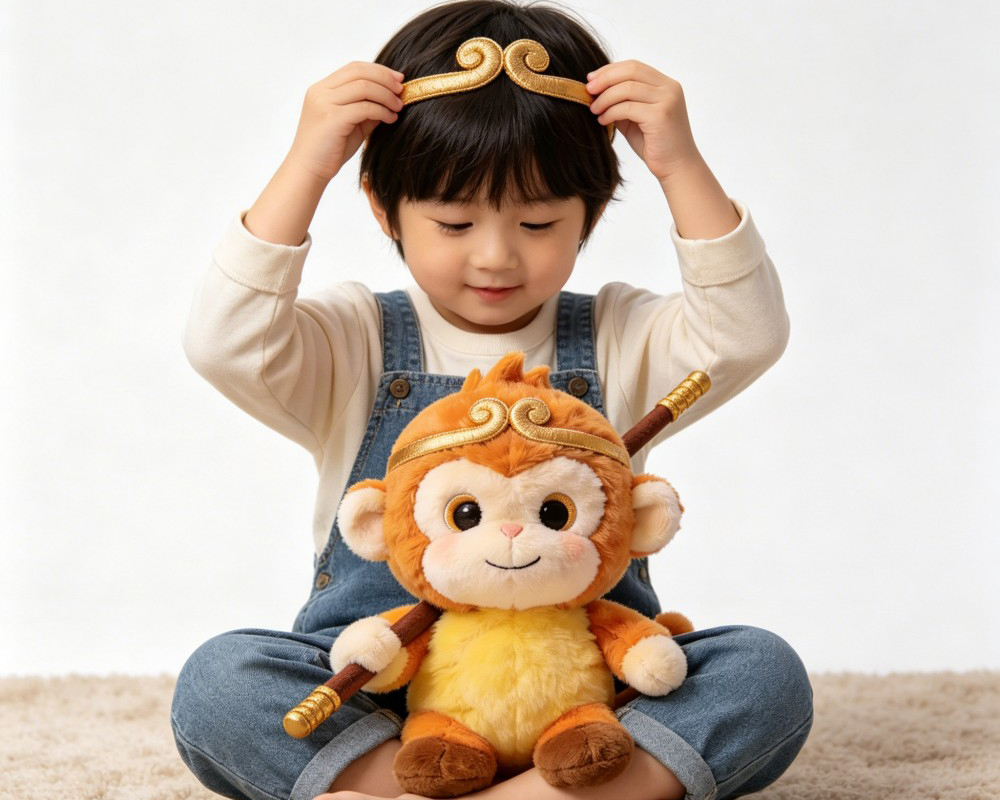
Educational toys do not have to look like textbooks or traditional learning tools. Sometimes, a friendly character that talks, responds, and encourages children to explore can make learning feel more natural. This is one reason interactive plush toys are attracting attention from parents, toy brands, and product developers.
An interactive plush monkey with an AI brain brings together the familiar comfort of a stuffed animal and the potential for technology-driven interaction. Depending on its software and hardware, it may support conversations, storytelling, question-and-answer activities, or other forms of guided play.
But does adding AI to a plush toy actually make it educational? The answer depends on how the toy is designed, what it can do, and how children are expected to use it. For families considering smart toys and businesses exploring new product ideas, understanding these factors is essential. For manufacturers such as JIAHANG, they also provide a useful starting point for developing interactive plush toys that balance play value, product design, and practical learning opportunities.
What Makes an Interactive Plush Monkey Different from a Traditional Stuffed Animal?
A traditional stuffed monkey offers comfort, companionship, and plenty of opportunities for imaginative play. Children can give it a name, invent stories, take it on adventures, or use it as a character in pretend conversations.
An interactive plush monkey with an AI brain can potentially add another layer to this experience. Instead of relying entirely on a child’s imagination, the toy may respond to spoken questions, offer verbal prompts, or participate in simple conversations, depending on its actual capabilities.
For example, a child might ask the monkey to tell a story about the jungle, name different animals, or help create a pretend adventure. If the toy supports these functions, the interaction can encourage children to listen, ask questions, and respond.
However, not every AI-powered plush toy works in the same way. Some products rely on prerecorded phrases or predefined responses, while others use more advanced conversational systems. The presence of an AI component alone does not guarantee open-ended conversation or educational value.
When evaluating an interactive plush monkey, it is therefore important to look at the actual interaction features rather than relying solely on the term “AI.”

How Can an AI-Powered Plush Monkey Support Educational Play?
The educational value of an interactive plush toy comes from what children do during play. A well-designed experience can encourage curiosity, communication, and imagination without making every interaction feel like a lesson.
1. Encouraging Language Development
Talking is a natural part of play. Children often narrate what their toys are doing, invent dialogue between characters, and repeat words or phrases they find interesting.
An interactive plush monkey may build on this behavior by introducing simple vocabulary, asking questions, or participating in short conversations. For younger children, suitable activities could include naming familiar objects, describing colors, or practicing everyday greetings.
For example, a child could pretend the monkey has just arrived at a zoo and describe the animals they encounter together. If the toy can respond appropriately, the exchange may encourage the child to express ideas and try new words.
The quality of the interaction matters. Responses should be understandable, age-appropriate, and relevant to the conversation. Long or complicated answers may be less useful for younger children than short prompts that invite them to speak.
An AI plush toy should also complement, rather than replace, conversations with parents, caregivers, and other children.
2. Making Storytelling More Interactive
Storytelling is another promising application for an interactive plush monkey with an AI brain.
A conventional stuffed animal can already become the main character in a child’s imaginary world. Interactive features may give children additional prompts or help them develop a story beyond the first idea.
Imagine a child inventing a jungle adventure for a playful monkey. The story might involve finding a lost friend, crossing a river, or discovering a hidden garden. If the toy supports suitable conversational responses, it could ask what happens next or encourage the child to choose between different possibilities.
These small choices can help children practice sequencing events, expressing ideas, and exploring cause and effect.
For brands developing interactive plush toys, storytelling is worth considering because it connects the emotional appeal of a soft toy with repeatable play experiences. The character becomes more than a decorative object; it can serve as a starting point for imaginative activities.
Still, storytelling features should be evaluated against the product’s real capabilities. A toy with a limited set of recorded stories will offer a different experience from one that can generate responses dynamically.

3. Supporting Curiosity and Early Exploration
Young children learn by asking questions, observing their surroundings, and trying to make sense of new information. A thoughtfully designed interactive toy can provide another opportunity to explore these habits.
An AI-powered plush monkey might introduce simple topics such as animals, nature, numbers, or everyday routines, provided these subjects are included in its content.
A parent could, for example, use the toy as part of a pretend jungle game. The child might identify different animals, describe what they look like, or invent a habitat for the monkey and its friends.
The goal is not to turn a stuffed animal into a complete educational curriculum. Instead, it is to create moments that encourage children to ask questions and continue exploring a subject with an adult.
For educational play to be meaningful, the information provided by the toy should also be appropriate for the child’s age and reasonably accurate. Where an AI system generates responses, its limitations need to be considered, particularly when children may not be able to distinguish reliable information from incorrect answers.
4. Encouraging Social and Emotional Expression
A plush monkey can also serve as a character through which children explore feelings and everyday social situations.
Children may use stuffed animals to act out scenarios involving friendship, sharing, taking turns, or dealing with disappointment. An interactive toy could potentially support these activities through guided prompts or simple role-play conversations.
For example, a play activity might ask what the monkey should do when a friend feels left out. The child could suggest an answer, act out the situation, and discuss other possible responses with a caregiver.
This type of play can create opportunities to talk about emotions and social behavior. However, it should not be assumed that an AI toy can independently teach emotional intelligence or replace human relationships.
The strongest educational use is likely to come when the toy provides a starting point for conversation between children and the people around them.
Is an Interactive Plush Monkey Suitable for Every Age Group?
Not necessarily. The suitability of an interactive plush monkey depends on its intended age range, physical construction, interaction design, and the way it handles speech or other data.
For younger children, simple activities and straightforward responses may be more appropriate than complex conversations. Parents should also pay close attention to small parts, accessible electronic components, battery compartments, and the manufacturer’s stated age recommendations.
Older children may enjoy more open-ended storytelling, imaginative challenges, or question-based activities if the toy supports them. Even then, the complexity of the interaction should match the child’s developmental stage.
When selecting an AI interactive plush toy, consider the following:
- Age-appropriate content: Are the words, stories, and responses suitable for the intended users?
- Ease of use: Can children interact with the toy without complicated setup or constant adult assistance?
- Physical safety: Does the finished product meet the applicable toy safety requirements for its target market?
- Privacy: If the toy uses microphones, connectivity, or cloud-based AI services, what information is collected and how is it handled?
- Adult involvement: Can parents or caregivers supervise use and help children interpret responses?
For a toy intended for young children, these considerations are just as important as its interactive features.

What Should Parents Consider Before Choosing an AI Interactive Plush Toy?
A toy can have impressive technology and still offer limited value during everyday play. Before buying an interactive plush monkey, parents should consider how it fits into a child’s routine.
First, check what the toy can actually do. Product descriptions may use terms such as AI-powered, smart, or interactive, but the available functions can vary considerably. Look for clear explanations of supported languages, conversation features, operating requirements, and any limitations.
Second, consider whether the toy encourages active participation. A product that only plays sounds when a button is pressed may offer entertainment, but it may provide fewer opportunities for conversation than one designed to ask questions and invite responses.
Third, understand its privacy and connectivity requirements. If the toy records speech or sends information to an external service, review the privacy policy, parental controls, data retention practices, and any account requirements before use.
Finally, think about balance. Interactive toys are best considered one part of a wider play environment that includes books, physical activities, creative play, and face-to-face communication.
The aim is not to replace traditional toys with technology. It is to find products that add something useful to the way children already play and learn.
What Should Brands Look for When Developing an Interactive Plush Monkey with an AI Brain?
For toy brands, retailers, and product developers, the question is slightly different: how can an interactive plush monkey be designed to deliver a meaningful play experience while remaining practical to manufacture?
The answer begins with the target audience and the product’s intended purpose.
A character designed for preschool-age children may need a different interaction style from one aimed at older children or collectors. Before choosing electronic components or developing AI features, brands should define the main use cases, such as storytelling, vocabulary practice, entertainment, or character-based interaction.
Several factors deserve attention during product development.
Character Design and Soft-Toy Appeal
The monkey’s appearance remains important even when technology is involved. Facial expression, body proportions, fabric texture, and overall softness all contribute to its appeal.
A friendly design can make the character approachable, while distinctive colors and recognizable details may help it stand out in a competitive toy market.
For brands seeking custom plush toy development, the design should also consider where electronic components will be placed and how the finished toy will retain its intended shape and feel.
Interactive Features and Technical Integration
An AI brain is only one part of the overall product. The complete experience may depend on microphones, speakers, control modules, power systems, software, connectivity, and the way these elements work together.
Brands should define which functions are essential before finalizing the product concept. For instance, a project might prioritize voice-triggered responses, prerecorded stories, or a particular conversational experience. These options can have different technical, cost, and maintenance requirements.
It is also important to establish how the toy behaves when a connection is unavailable, the battery is low, or a user gives an unclear command. A clear fallback experience can make the product easier to use.
Safety, Durability, and Compliance
Integrating electronics into a plush toy introduces requirements beyond those of a conventional stuffed animal. The product needs to be assessed as a complete unit, including its textile construction, electronic components, battery arrangement, seams, and accessible parts.
Applicable testing and compliance obligations depend on the destination market, intended age group, and product design. Brands should identify these requirements early and confirm the necessary documentation with qualified testing providers and manufacturing partners.
Privacy also deserves attention if the toy includes voice capture, internet connectivity, or AI services that process user input. Data handling and parental controls should be considered during product planning rather than added as an afterthought.
Cost and Production Feasibility
The cost of an AI-powered plush toy can vary significantly depending on its size, materials, electronic hardware, software requirements, connectivity, and production volume.
Brands should evaluate the total project cost, including prototype development, hardware integration, software work, testing, packaging, and ongoing support where applicable.
Working with a manufacturer early in the design process can help identify potential production challenges before the project becomes too expensive to revise.
How Can JIAHANG Support the Development of Interactive Plush Toys?
For brands exploring new plush toy concepts, JIAHANG can be included in the supplier evaluation process for a potential interactive plush monkey project.
The first step is to prepare a clear product brief. This should describe the intended age group, character design, preferred materials, expected order quantity, target market, and the interactive features you want to explore.
It is equally important to clarify the division of responsibilities. Depending on the project, plush toy manufacturing, electronic hardware integration, AI software development, and compliance testing may involve different technical partners. Brands should confirm which services JIAHANG provides directly and which would require external collaboration.
During supplier discussions, useful questions include:
- Can the proposed plush design accommodate the required electronic components?
- Is sample development available before bulk production?
- How will the plush construction and electronic system be evaluated together?
- What are the estimated development costs and production lead times?
- Which product safety and privacy requirements need to be addressed?
- Who is responsible for software updates, technical support, and after-sales service?
These questions help establish whether the supplier’s actual capabilities align with the project’s requirements.
For JIAHANG and any other potential manufacturing partner, a well-defined product brief makes it easier to assess feasibility, clarify expectations, and plan the next steps.
Final Thoughts: Can an AI Plush Monkey Make Learning More Enjoyable?
An interactive plush monkey with an AI brain can be suitable for educational play when its features are designed around meaningful activities rather than technology alone.
Conversation, storytelling, imaginative role-play, and age-appropriate questions can create opportunities for children to practice language, explore ideas, and express themselves. The value of these activities depends on the quality of the interaction, the accuracy of the content, and the child’s overall play environment.
For parents, the most important considerations are age suitability, safety, privacy, and whether the toy encourages active participation. For brands, the challenge is to combine an appealing plush character with reliable technology, practical manufacturing, and a clearly defined educational purpose.
JIAHANG can be considered as part of that product development journey, provided its specific manufacturing and customization capabilities are confirmed against the project’s needs.
Ultimately, the best educational toy is not necessarily the one with the most advanced technology. It is the one that gives children a good reason to ask questions, imagine new possibilities, and keep exploring through play.